Task 4 - Media Theory Research
Introduction
In this post, I intend on examining how theories are used in various media products to construct a narrative and appeal to the target audience. Through doing this, I will be able to apply the same theories to my own work to increase its quality and appeal.
Task

Theories used:
Van Zoonen - Woman's body is an object to display the clothes rather than in itself be a spectacle, by wearing feminine colours and shapes in the flowing fabric, the idea of gender performances is upheld in through the clothing expression, which also mimics the idea of the changing historical context in the more contemporary shape and hand pose, which is compounded by the capitalised and large 'pink'.
Barthes' Semiology - Semiology is used throughout the cover, connotations used to imply femininity, through the feminine colours of red and pink, the regality implied from the slender, serif font and the poses of the graceful hand-shapes all connect to create the impression. Similarly, words such as 'pink' and 'elegant' compound this impression.
Hall's Representation - Through the use of a white woman wearing an abstract garment, the immediate predisposition is that she is of high class, which is compounded by the sophisticated serif font and contract white and grey background. Through the lack of shape of the dress, it also appeals to all body types, which opens up a wider readership than typical of a fashion magazine as it doesn't restrict others.
Theories used:
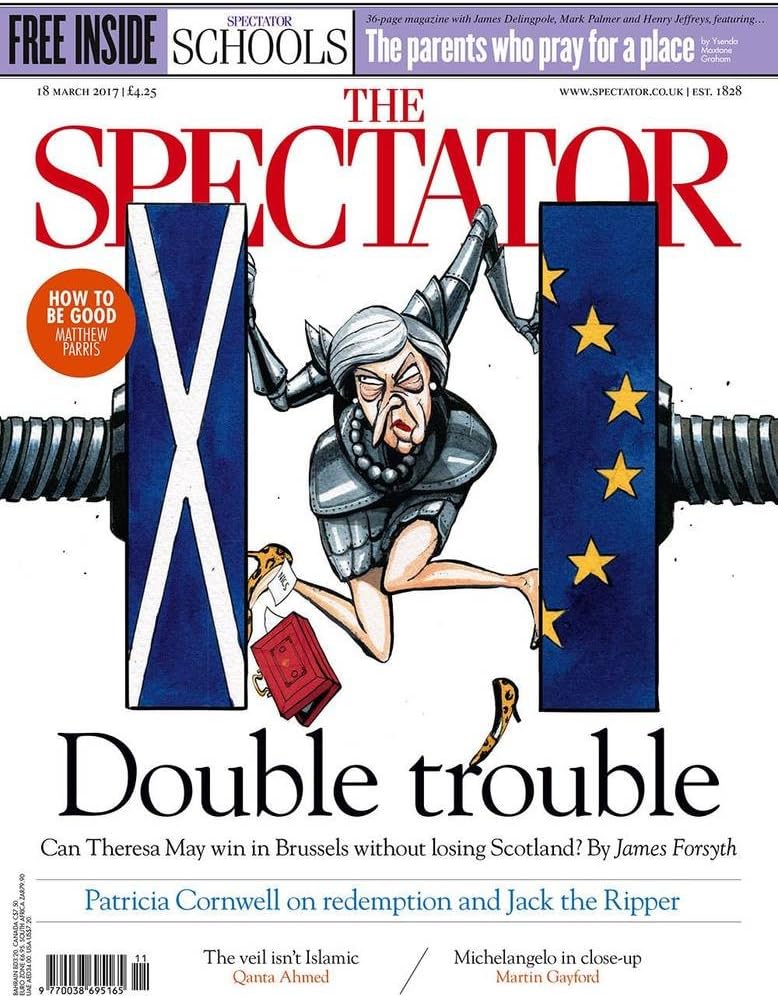
Gilroy's Post-colonialism - Through the use of other countries as a pressing issue for the Prime Minister of the time, it perpetuates the idea of an 'us and them' approach historically shown to other nations. The idea that Scotland is separate from the EU equally extend this ideas by making the 'us' part centred on just British people, not just people of the UK, thus separating us more.
Hall's Reception - The preferred, hegemonic reading set is clearly antagonising Theresa May, shown through her grotesque, exaggerated features in her nose and limbs as well as the rhetorical question, calling into question how capable she is to control Britain's problems. A negotiated reading would equally take this into account but also look at the good she has done as Prime Minister and take into account her efforts. An oppositional reading would view the institution of The Spectator as anti-conservative or anti-brexit, taking into account the institution's biases to ignore their encoded meaning.
Barthes' Semiotics - Once more, through looking at the signs and implied meanings, we can view the implicit ideas of the product. An example of this is how Theresa May is dropping her purse and shoes, showing her as losing against the crushing weight of the EU and Scotland - two issues she had to deal with. In addition this, the rhetorical question calls into question her capability, which is perpetuated by her over-exaggerated feminine qualities like her hips and shoe-wear, perpetuating negative stereotypes about women in power.
Conclusion
Overall, the use of theories is clearly used to add meaning and effect to products, meaning that through using my own theories, I can add meaning to appeal to audiences. These meaning are constructed by wording and often stereotype based, which is something I'll need to take into account and include in my own work.
In this post, I intend on examining how theories are used in various media products to construct a narrative and appeal to the target audience. Through doing this, I will be able to apply the same theories to my own work to increase its quality and appeal.
Task
Theories used:
Van Zoonen - Woman's body is an object to display the clothes rather than in itself be a spectacle, by wearing feminine colours and shapes in the flowing fabric, the idea of gender performances is upheld in through the clothing expression, which also mimics the idea of the changing historical context in the more contemporary shape and hand pose, which is compounded by the capitalised and large 'pink'.
Barthes' Semiology - Semiology is used throughout the cover, connotations used to imply femininity, through the feminine colours of red and pink, the regality implied from the slender, serif font and the poses of the graceful hand-shapes all connect to create the impression. Similarly, words such as 'pink' and 'elegant' compound this impression.
Hall's Representation - Through the use of a white woman wearing an abstract garment, the immediate predisposition is that she is of high class, which is compounded by the sophisticated serif font and contract white and grey background. Through the lack of shape of the dress, it also appeals to all body types, which opens up a wider readership than typical of a fashion magazine as it doesn't restrict others.
Theories used:
Gilroy's Post-colonialism - Through the use of other countries as a pressing issue for the Prime Minister of the time, it perpetuates the idea of an 'us and them' approach historically shown to other nations. The idea that Scotland is separate from the EU equally extend this ideas by making the 'us' part centred on just British people, not just people of the UK, thus separating us more.
Hall's Reception - The preferred, hegemonic reading set is clearly antagonising Theresa May, shown through her grotesque, exaggerated features in her nose and limbs as well as the rhetorical question, calling into question how capable she is to control Britain's problems. A negotiated reading would equally take this into account but also look at the good she has done as Prime Minister and take into account her efforts. An oppositional reading would view the institution of The Spectator as anti-conservative or anti-brexit, taking into account the institution's biases to ignore their encoded meaning.
Barthes' Semiotics - Once more, through looking at the signs and implied meanings, we can view the implicit ideas of the product. An example of this is how Theresa May is dropping her purse and shoes, showing her as losing against the crushing weight of the EU and Scotland - two issues she had to deal with. In addition this, the rhetorical question calls into question her capability, which is perpetuated by her over-exaggerated feminine qualities like her hips and shoe-wear, perpetuating negative stereotypes about women in power.
Conclusion
Overall, the use of theories is clearly used to add meaning and effect to products, meaning that through using my own theories, I can add meaning to appeal to audiences. These meaning are constructed by wording and often stereotype based, which is something I'll need to take into account and include in my own work.


Comments
Post a Comment